


The great advantage of our company is that we know and grow a large part of the mungbeans that we export, which allows us to know which ecological fertilizers, fungicides and insecticides we can use in the field and that do not chemically contaminate our harvest, which ensures that we obtain a product that is harmless and safe for human consumption and also cares our workers and the environment.
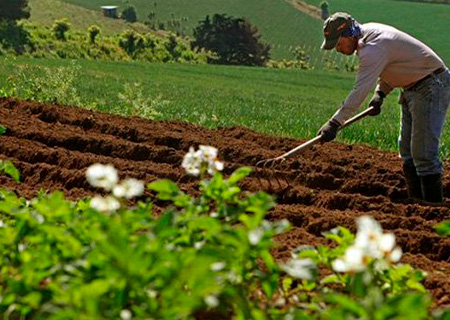
- SOIL PREPARATION, SEED AND SOWING
- GOOD AGRICULTURAL PRACTICES (GAP)
- HARVEST AND POST-HARVEST TASKS
The process begins with the preparation of the crop fields, which are primarily agricultural lands vacated after the previous summer’s rice harvest.
This allows us to:
A.1) WATER SAVINGS
The remaining moisture in these fields leads to less water use, as the fields only need to be irrigated once for mechanical preparation, and no water is consumed during the cultivation phase.
A.2) USE OF ECOLOGICAL FERTILIZER
The rice straw left behind by the rice fields is used as natural organic matter by mechanically incorporating it into the soil. Through the application of effective microorganisms, it is degraded and incorporated into the soil as fertilizer, thus avoiding the indiscriminate burning that is commonly practiced, with the resulting environmental pollution.
The seed is selected from our fields harvested the previous year, based on field size and productivity, and also from ecological farmed agricultural fields. This allows us to maintain a genetic line of mungbeans that is productive, of good size, and acclimated to our climate, as well as resistant to local diseases and pests.
Agricultural practices are primarily based on fertilization, fungal disease control, and pest control, all through foliar applications by people equipped with motorized backpacks and accessories for applying sprayed solutions. This allows for rapid absorption of nutrients and healing substances through the leaves, also creating a protective repellent layer against pests.
In the area of foliar fertilization, 80-90% of the products used come from organic sources (effective microorganisms) that are completely harmless to people and the environment. They create favorable conditions for plants to develop their own defense mechanisms and obtain organic matter balanced with essential nutrients as their main source of nutrition, and fortified with micronutrients that make them stronger and more resistant to diseases and pests.
However, given the incidence of certain endemic pests in the areas, from time to time we must reinforce with applications of synthetic insecticides but with a low degree of toxicity and making a rotation that allows us not to exceed the Maximum Pesticide Residue standards of our main destination market, which is Korea.
CUTTING
The harvesting process begins with the manual cutting of the plants, most of which have already dried grain pods, with the support of field staff.
THRESHING
This delicate harvesting task is primarily done manually and consists of placing the previously cut, dry plants on polyethylene blankets. A tractor then runs over the dry plants to break the pods and force the grains to fall onto the blanket.
It should be noted that, to date, no effective threshing machine has been found on the market with a very low grain breakage rate in this process.
AIR VENTING AND SCREENING
In this manual process, the stalks and husks are separated from the grains. Using sieves and wooden or plastic shovels, the grains and husks are winnowed. The husks are separated by the wind since they are lighter than the grains. So the grains with other large impurities (stems, clods, etc.)fall onto the sieve, and are also separated after going through it.
BAGGING
When the loctao bean grains have been separated and are almost completely clean, they are bagged manually and tied to be transported to the warehouse by truck.